Italy Wedding Photographer Tuscany, Puglia, Umbria & lago Maggiore
Intentional wedding photography for couples in love
Let’s capture your love story
Documentary wedding photography across Italy — Tuscany, Puglia, Umbria, and Lake Maggiore.
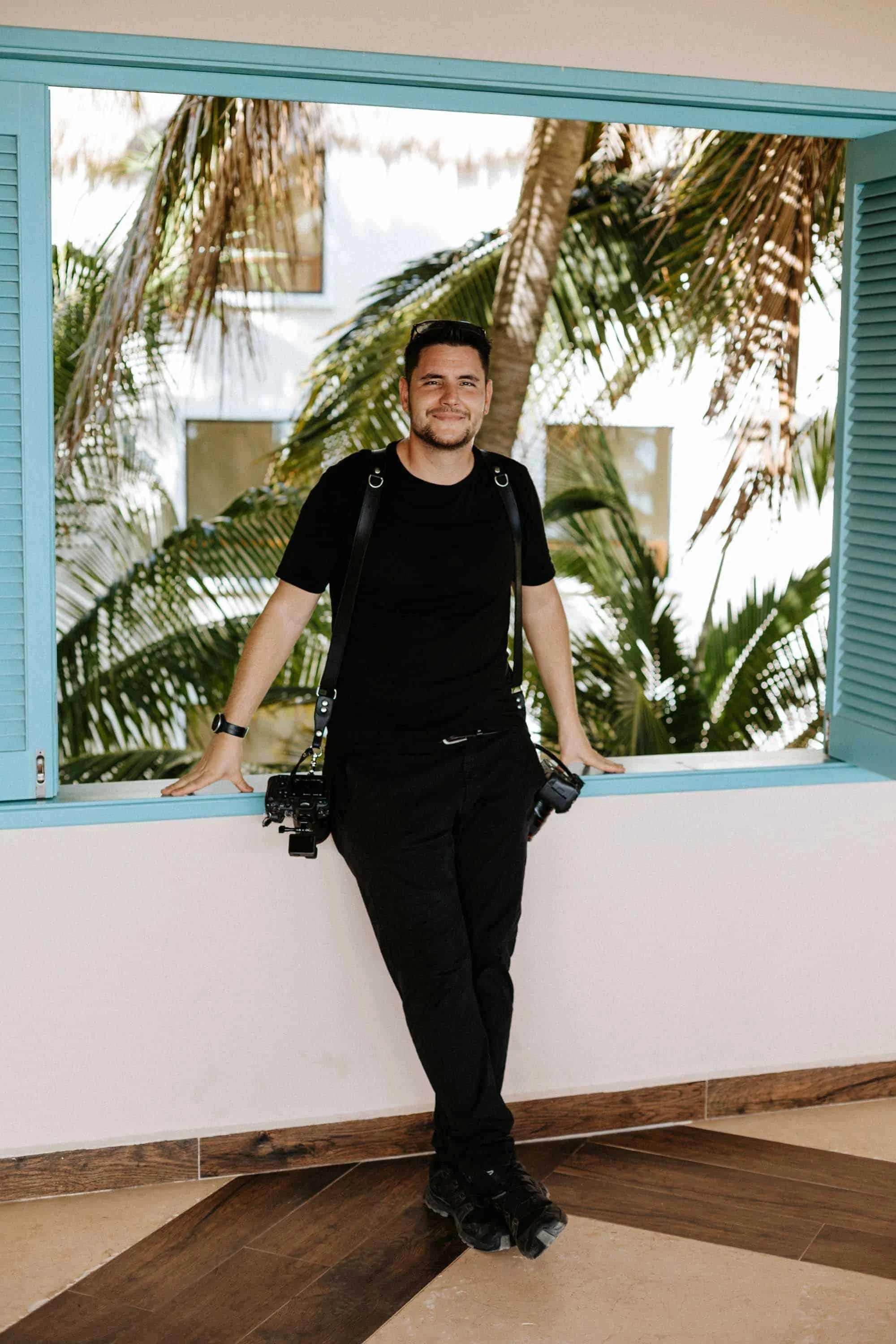
I'm Luke, an Italy wedding photographer working in a documentary style. Italian-born, based between Cancún and Italy, I have been photographing destination weddings here for the past five years, with twenty Italian weddings on the portfolio to date.
This page is for couples planning a wedding in Italy, whether you are flying in from the United States, the UK, or elsewhere in Europe. Below: the regions I work in, what an Italian wedding looks like when it is photographed honestly, and how to plan from abroad.
Each region has a dedicated page with venues, logistics, and real weddings.
What an Italian wedding actually looks like
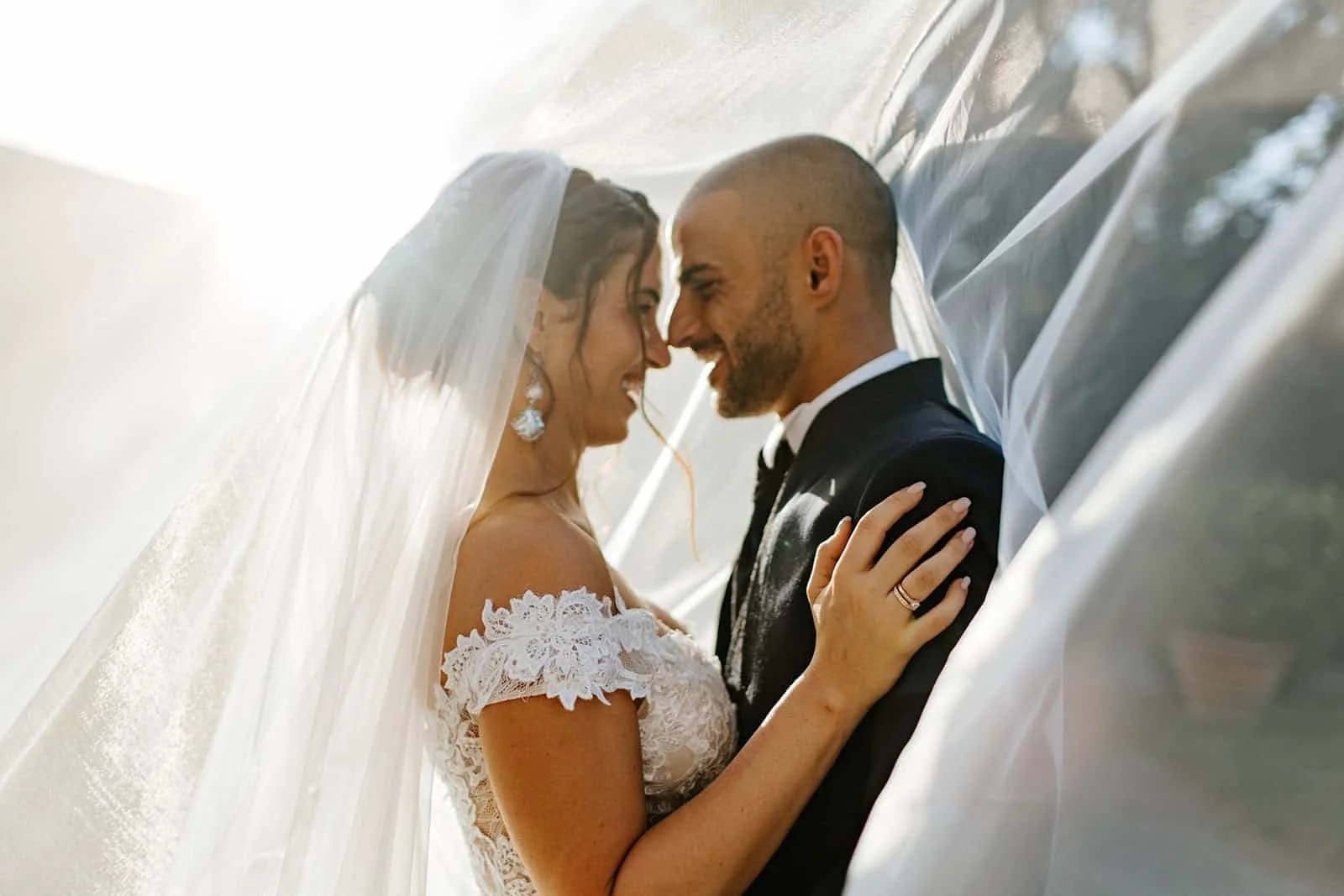
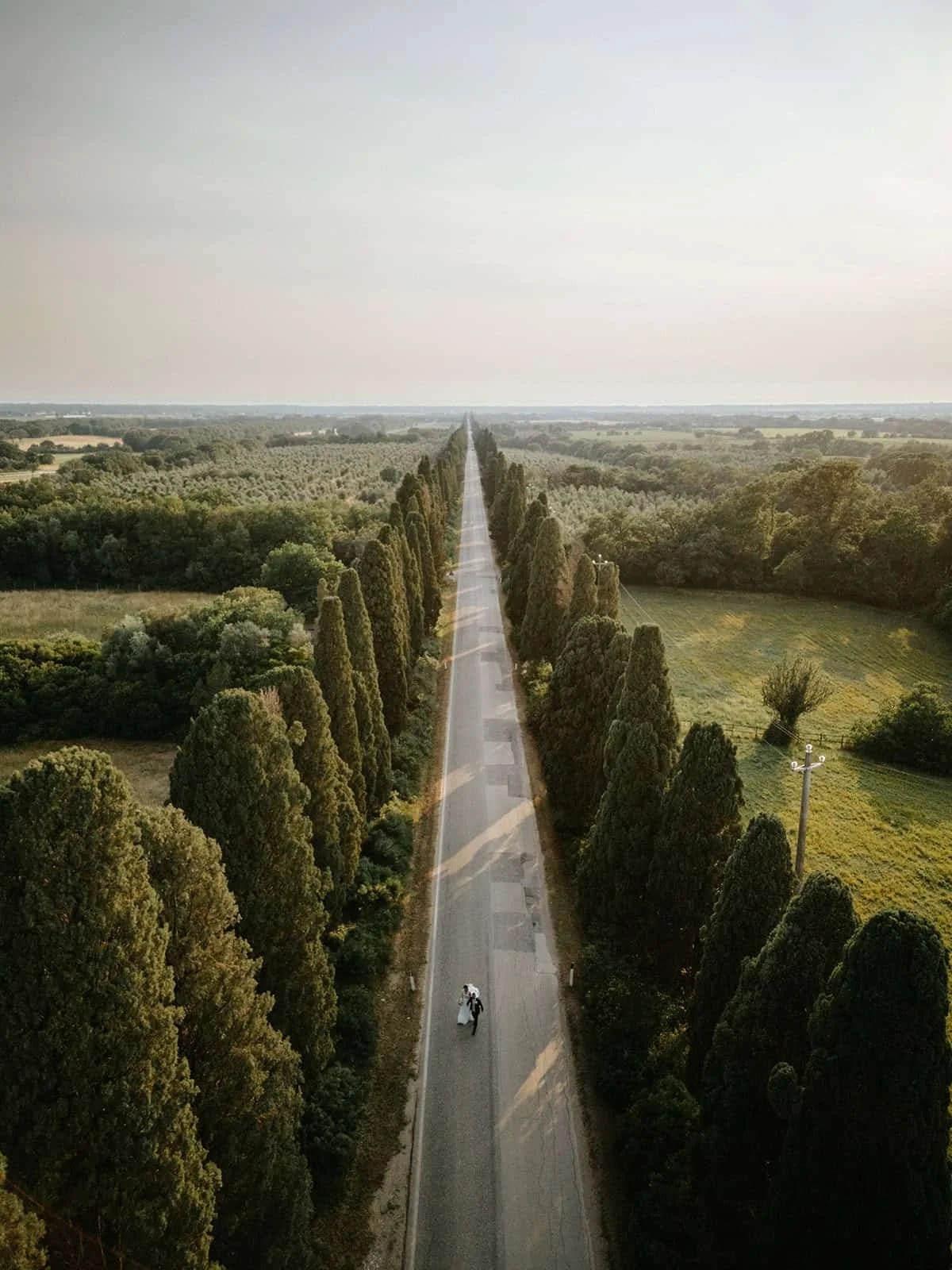
An Italian wedding is rarely about the venue. The venue is a stage; the day belongs to the long lunch that runs into the evening, the grandfather pouring his own wine, the courtyard filling slowly with cousins. Time moves differently here. A 4 p.m. ceremony means the first photograph happens around noon and the last one happens after 1 a.m., when someone has brought out a guitar and the children are asleep on the chairs. For couples coming from abroad: an Italian wedding cannot be rushed and should not be over-scheduled. The best ones leave room for the day to breathe. That is what I try to photograph.
Where I work in Italy
Tuscany
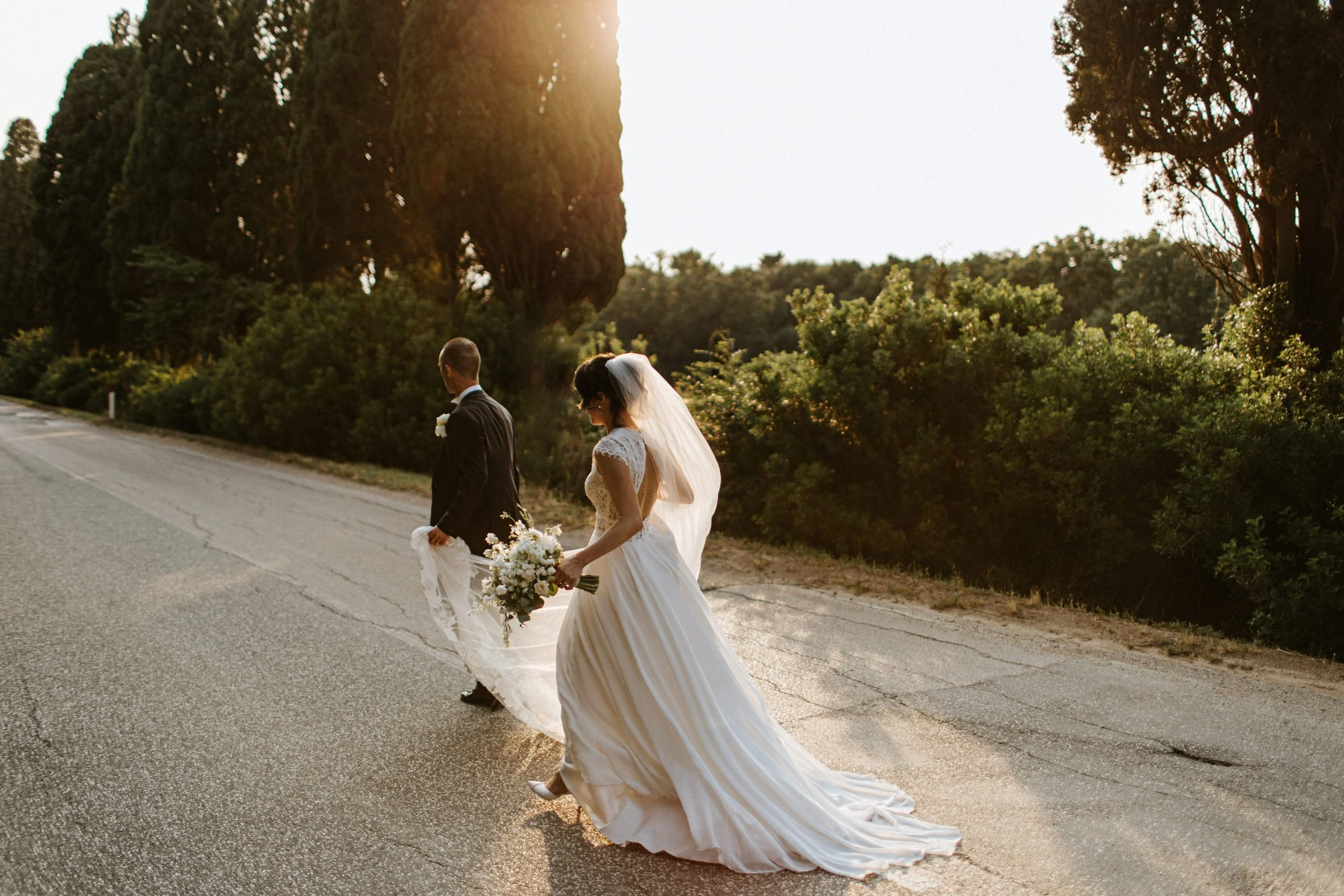
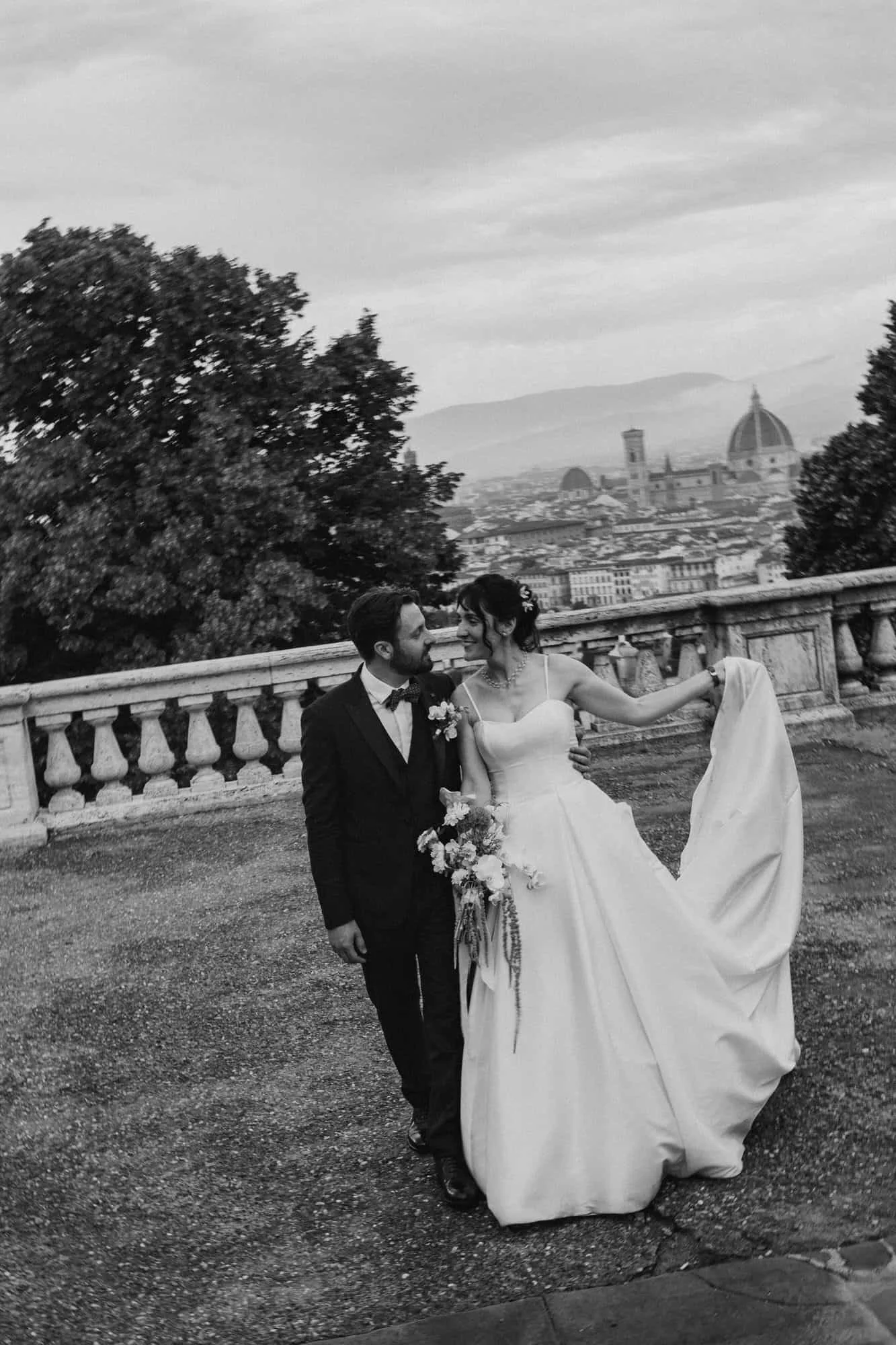
Tuscany is where most of my Italian work lives, and where I am from. My family is from the Livorno area, and I have been photographing weddings between Florence, the Val d'Orcia, and Chianti for the past five years — including, last summer, my own long-lost cousin's wedding in Florence, which was as strange and wonderful as that sounds.
Tuscan weddings tend to gather around restored farmhouses, hilltop villas, and the long tables of agriturismi. The light here in late afternoon is the light that every photographer has been chasing for two hundred years, and for good reason. The closest airports are Florence (FLR) and Pisa (PSA), with Rome (FCO) a two-hour drive south for couples flying in long-haul. The strongest season runs late April through October; July and August are hot and full, and I generally steer couples toward May, June, or September if they have flexibility.
Puglia
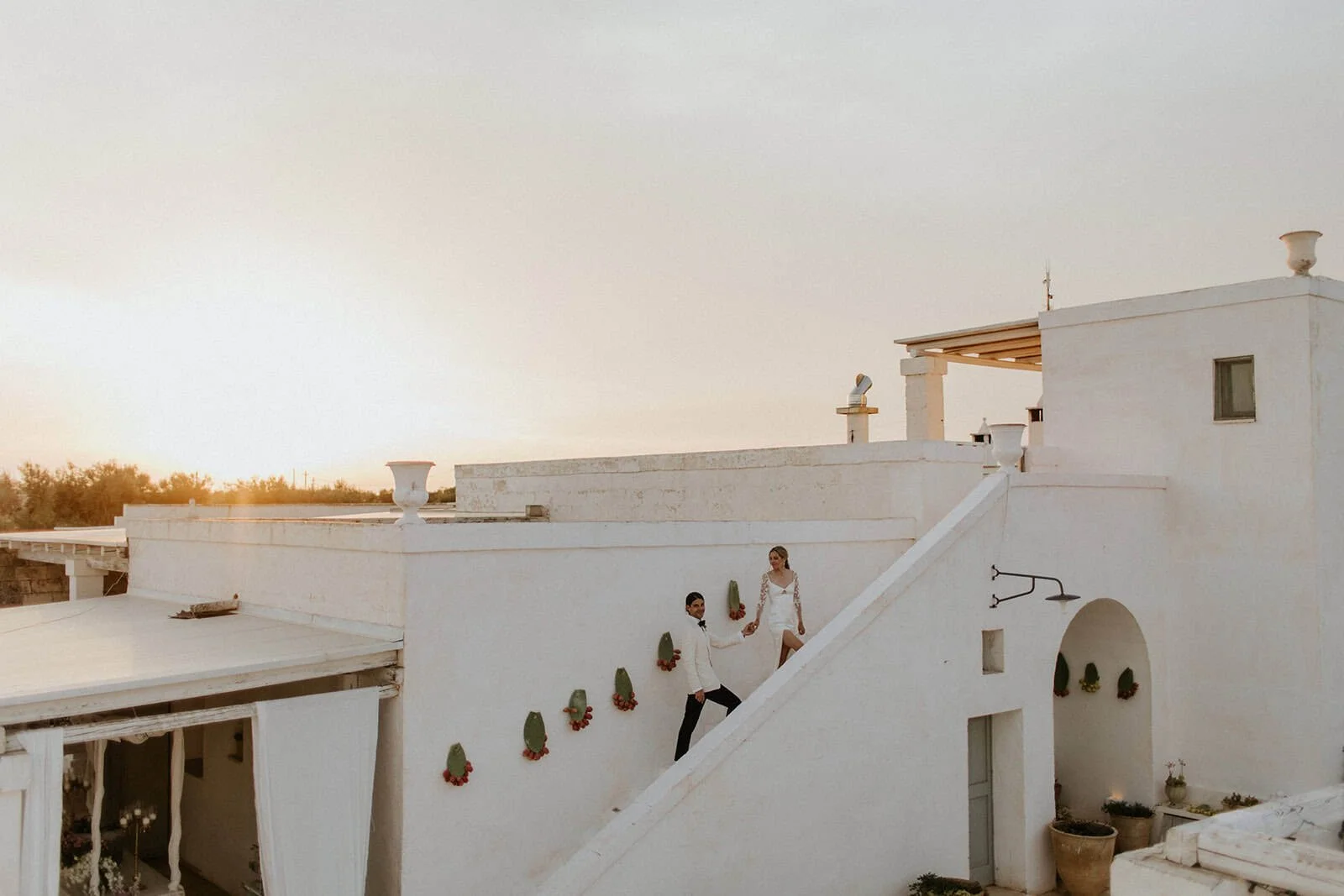
Puglia is the south, and it photographs differently than the north. The light is whiter, the architecture is whitewashed and low, and the food traditions are older and more agricultural. Weddings here tend to happen at masserie — fortified farmhouses converted into venues — and the day often spills out into olive groves, courtyards, and stone trulli.
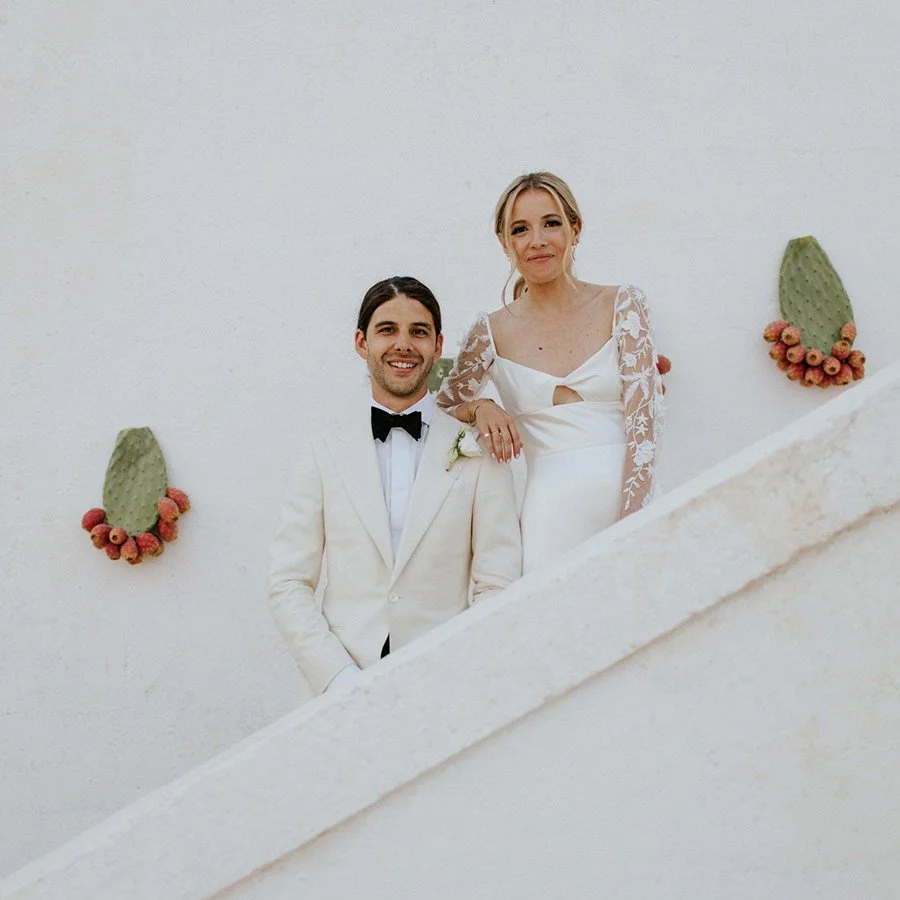
I photographed Natalie and Adrian's wedding at Masseria Potenti, one of the masserie I keep coming back to in my mind when couples ask me what a Puglian wedding actually feels like. The answer, that day, was a long lunch under the pergola that turned slowly into a long dinner, the kind of meal where nobody quite remembers when one course ended and the next began. That is Puglia, photographed honestly. Most international couples fly into Bari (BRI) or Brindisi (BDS), both well-served by European carriers. The best months are May, June, and September; July and August are punishingly hot inland. See full wedding here.
Umbria
Umbria is the quiet sister to Tuscany. The hills are similar, the food is similar, but the crowds are not — and that is the whole point. Couples who choose Umbria are almost always couples who have been to Tuscany before, or who want a wedding their American friends will not have already seen on Instagram.
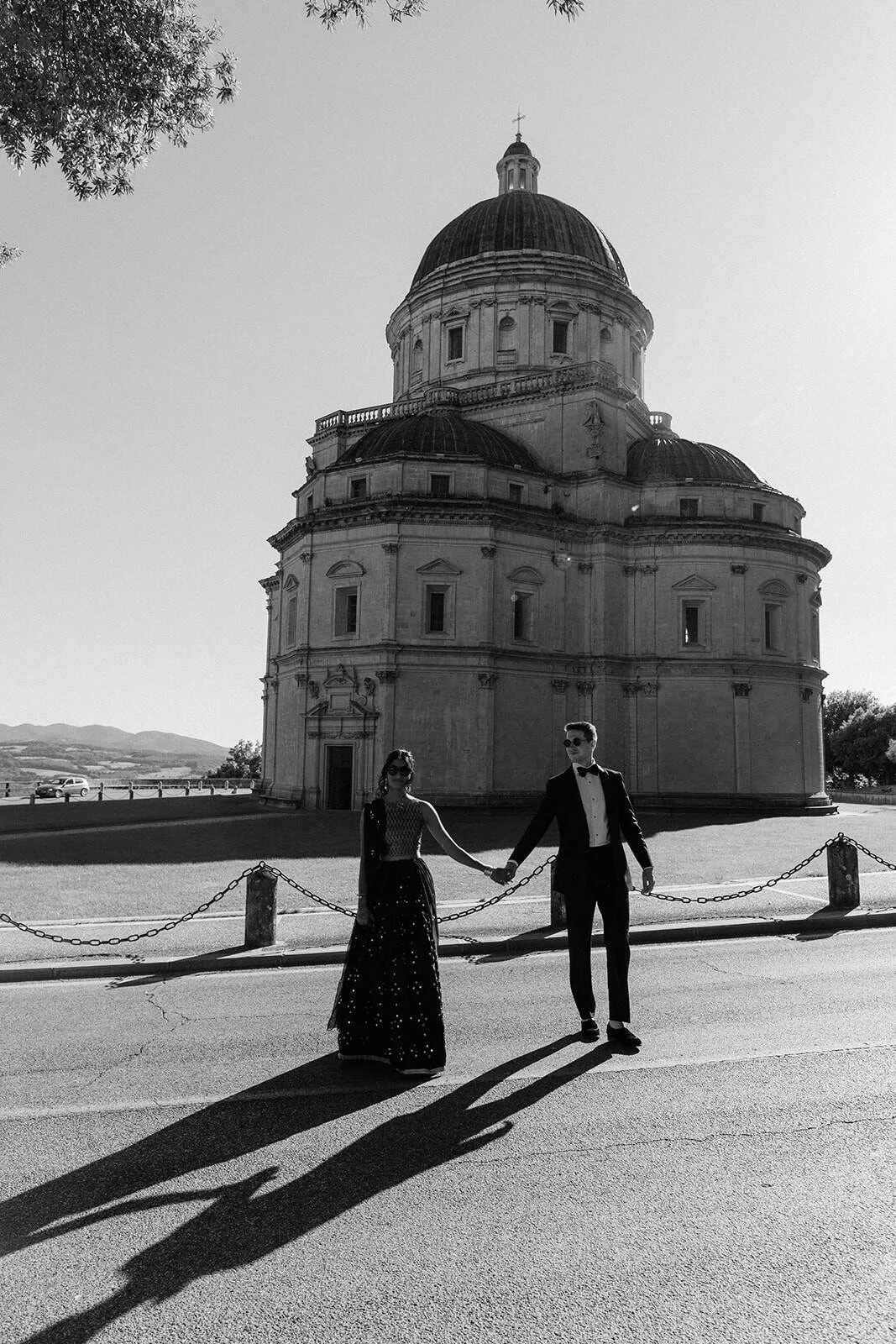
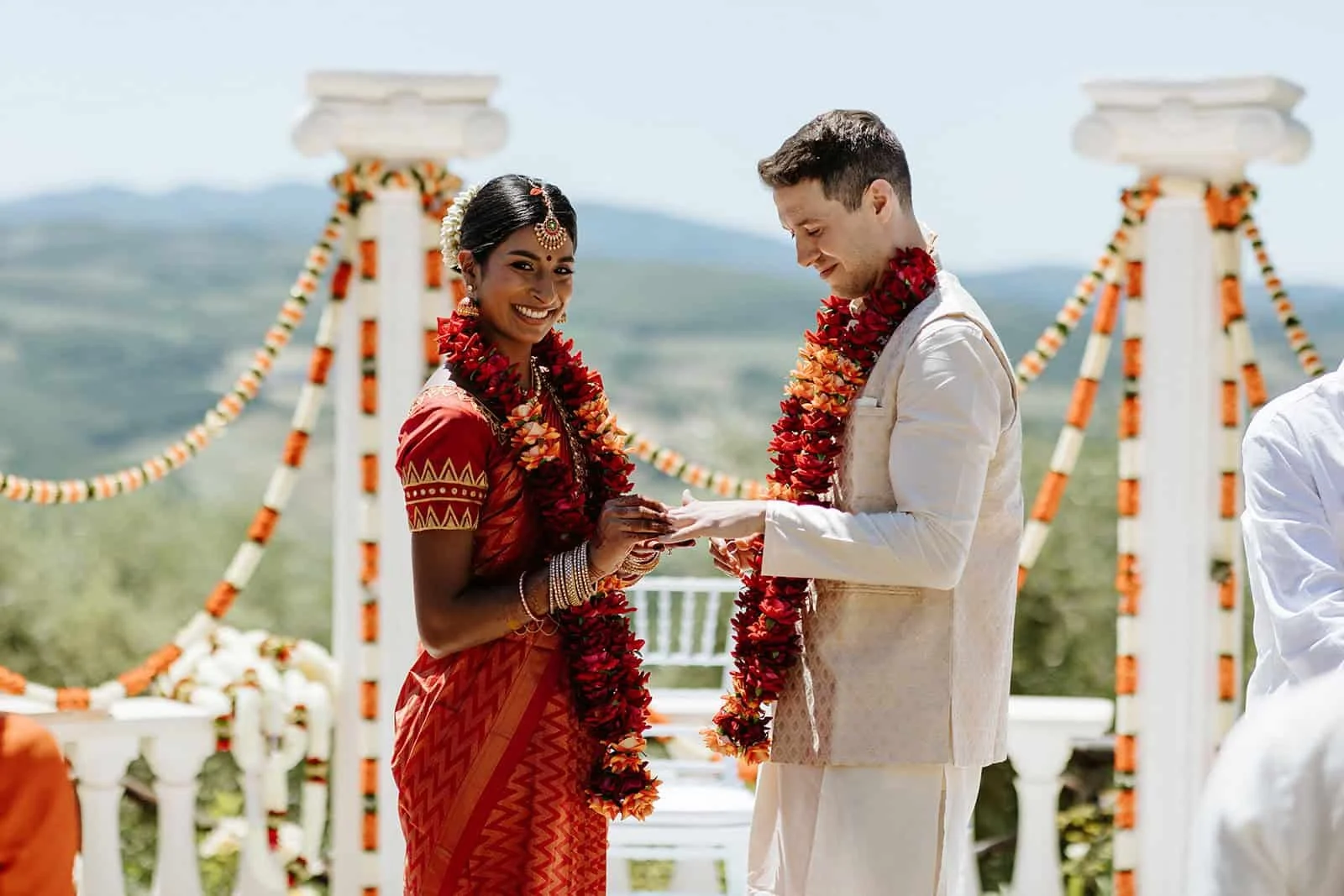
The villages of Assisi, Orvieto, Spoleto, and Todi sit on hilltops dating back a thousand years and remain almost completely free of mass tourism. In May 2026 I photographed Amba and Daniel's Hindu wedding at Monastero Santa Margherita in Todi — a twelfth-century monastery turned wedding venue, and the kind of cross-cultural day that Umbria handles beautifully: ancient ceremonies from one continent inside stone walls from another, in a town quiet enough to let the day be what it is. The nearest airports are Perugia (PEG) for regional flights and Rome (FCO) at about a two-hour drive.
Lago Maggiore
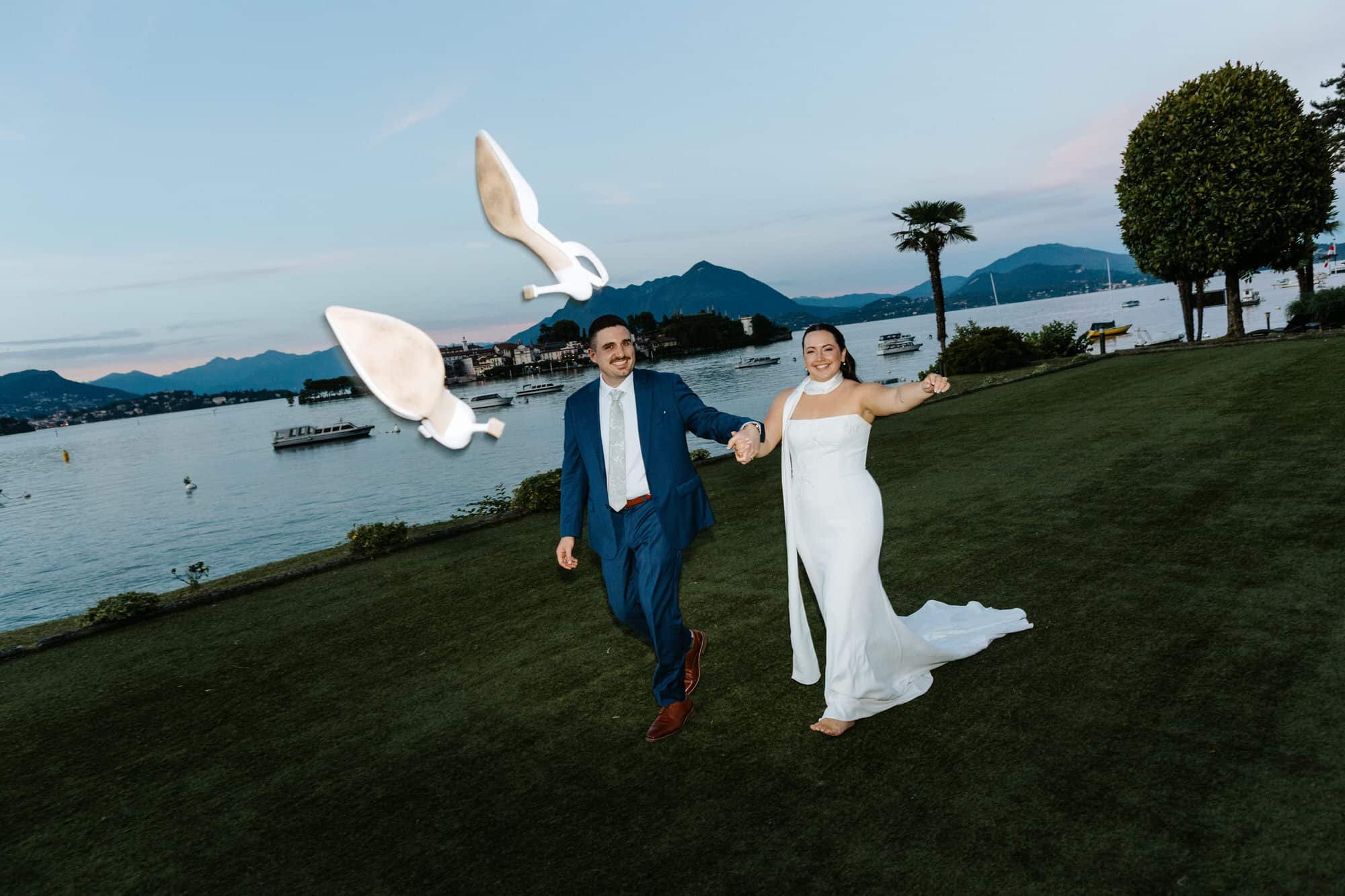
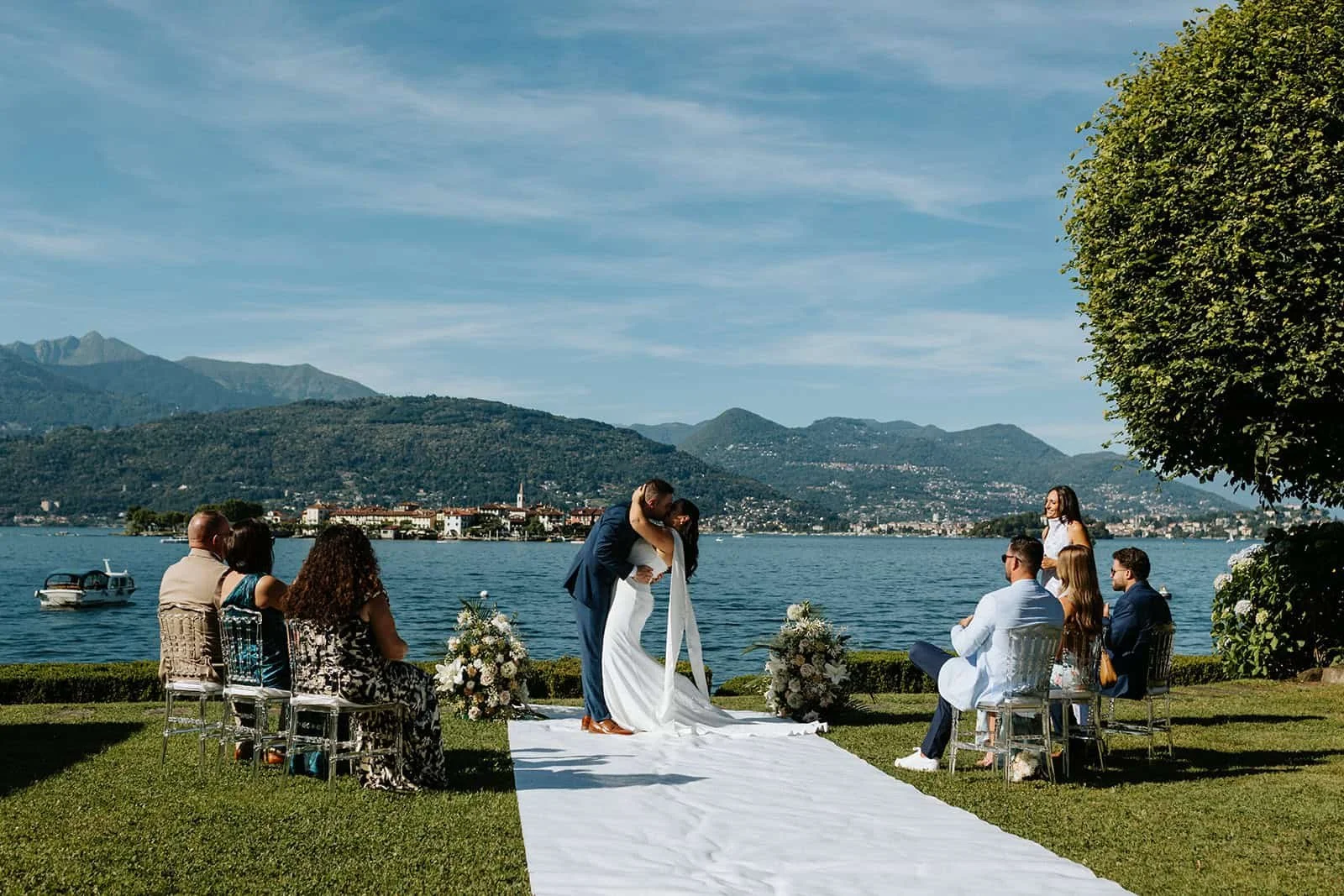
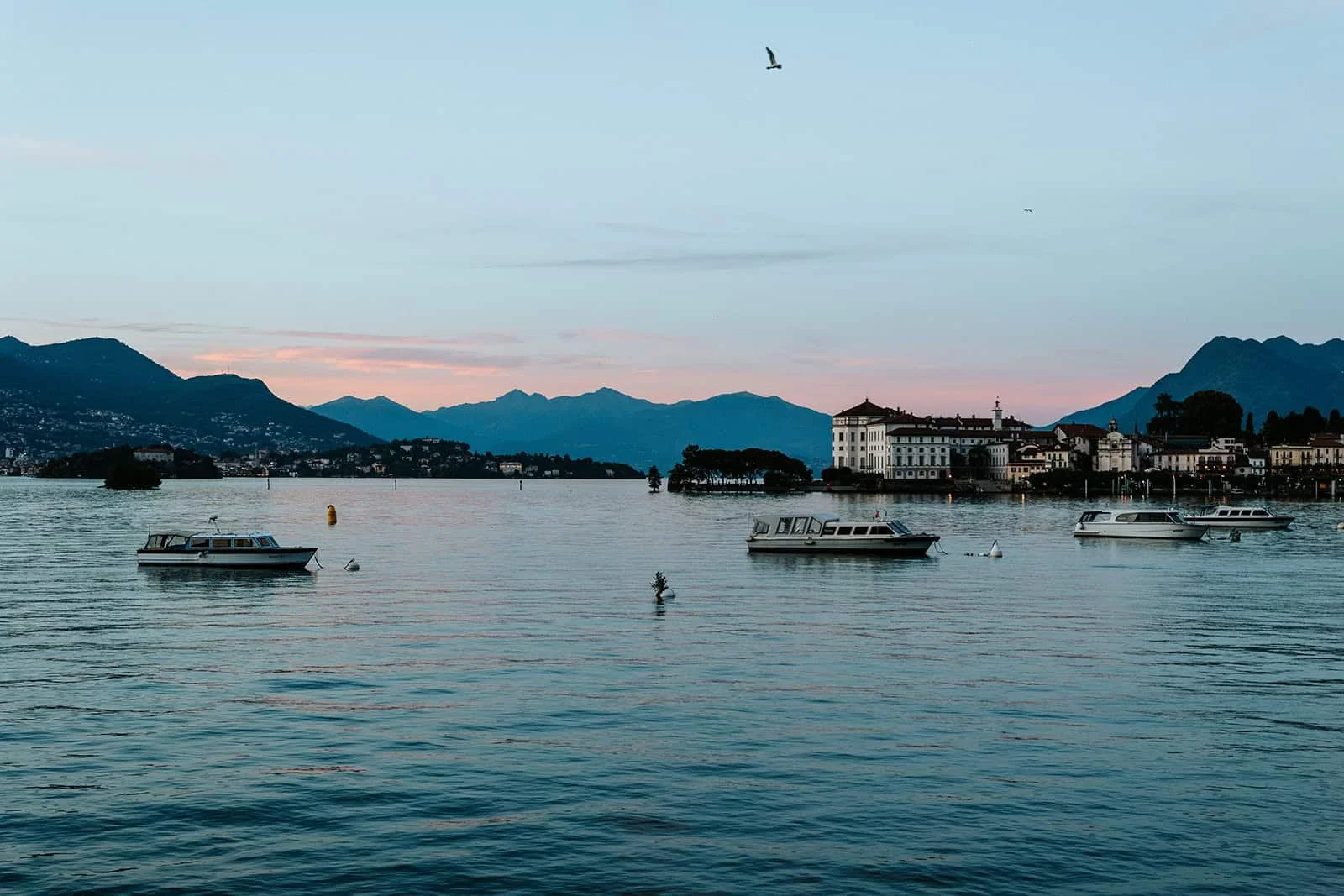
Lake Maggiore is the smallest section of my Italian work and one of the most personal. Last summer I photographed a micro wedding on the lake for a couple whose engagement I had shot two years earlier in Tulum — the same two people, the same kind of quiet between them, but a different country and a different lake. That is the kind of long arc this work allows for, when it is allowed to slow down.
Lake weddings are their own category. The light reflects up off the water in a way that does specific things to skin tones and to white fabric, and the Borromean Islands — Isola Bella, Isola Madre, Isola dei Pescatori — are some of the most photogenic small islands in Europe. Most weddings happen between Stresa, Pallanza, and Verbania on the western shore.
Milan Malpensa (MXP) is roughly an hour by car. The season is short and concentrated: May through September, with the most reliable weather in June and September.
Planning an Italian wedding from abroad
-
Many international couples handle the legal paperwork at home and have a symbolic ceremony in Italy. This is the most common path and it removes most of the bureaucratic weight from the day. Couples who want to be legally married in Italy can do so, but the documentation takes time and a local planner is essentially non-negotiable.
-
I work with planners across all four regions and am happy to recommend ones who match how you want to be married. Their value is not just logistics — it is knowing which masseria has good acoustics for a string quartet, which villa has the right kitchen for the dinner you want, which town hall does symbolic ceremonies that do not feel like an afterthought.
-
An Italian wedding day starts earlier and ends later than most American weddings. Expect getting ready coverage to begin around late morning, the ceremony to fall between 4 p.m. and 6 p.m., and the dinner to run for three to four hours before the dancing starts. The best coverage runs from getting ready through to the last dance, which usually means ten to twelve hours.
-
For peak months — May, June, September, early October — most couples book a photographer eight to fourteen months out. Off-peak shoulder months can sometimes be booked closer in, but the best venues fill earlier than the best photographers do, so if you have a venue you are working backward from a date that is already set.
Featured Italian weddings
-
![Bride and groom holding hands in front of the domed Renaissance church at Todi, Umbria — Italy wedding portrait.]()
Amba & Daniel
Monastero santa Margherita wedding in Todi Umbria
-
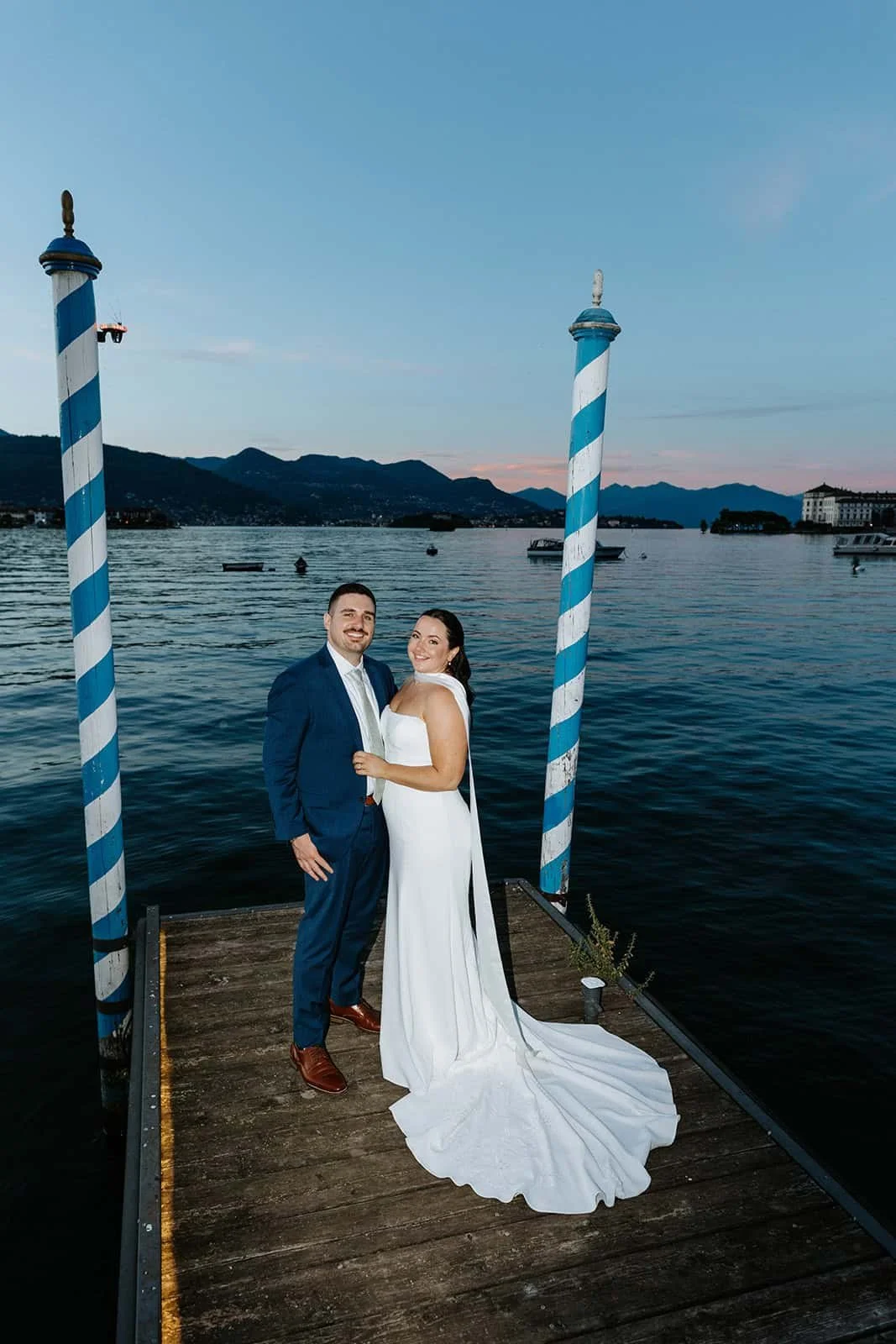
![Erin and Bill posing on the dock between blue and white striped mooring poles at Villa Aminta, with Lago Maggiore, mountains and town of Stresa in the background.]()
Erin & Bill
Destination wedding at Villa Aminta in Stresa on Lago Maggiore.
-
![Bride and groom silhouetted in golden hour backlight at Villa Oliva, Lucca, Tuscany — Virginia and Matteo's wedding photographed by Luke Fotoliv]()
Matteo & Virginia
Italian wedding at Villa Oliva in Lucca, Tuscany.
-
![portrait of bride and groom during their wedding day at masseria potenti in puglia]()
Natalie & Adrian
Natalie & Adrian’s destination wedding at Masseria Potenti in Puglia, Italy.
See full wedding -
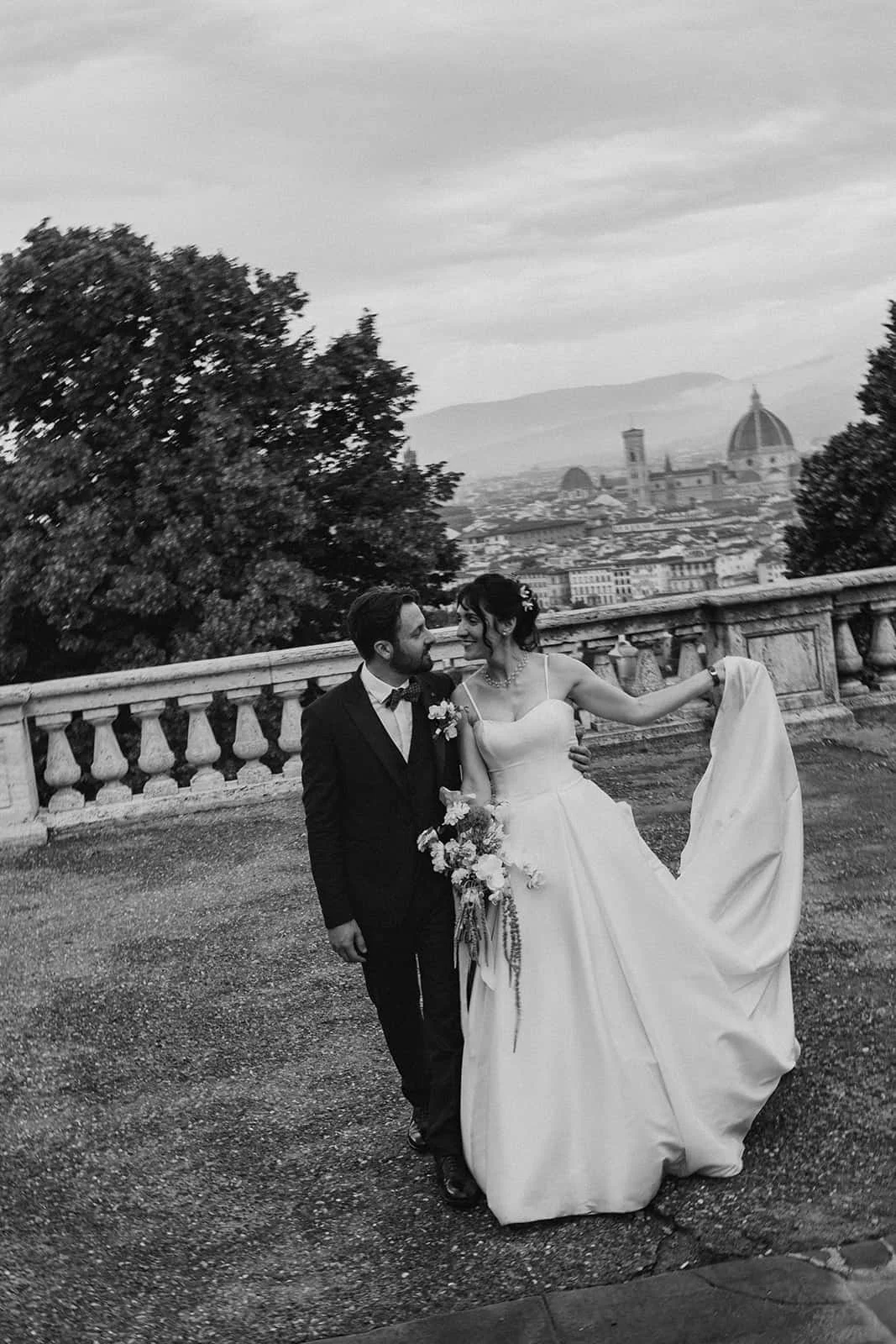
![Matilde and Marco on a Florence terrace overlooking the Duomo during their wedding ceremony at Chiesa Ognissanti]()
Marco & Matilde
Marco & Matilde’s ceremonny was held at Chiesa Ognissanti in the heart of Firenze. Reception was at Fattoria i Bonsi in Reggello.
Frequently Asked Questions
-
We are available to photograph all over Europe. We have photographed 22 weddings In Italy and 1 in Ireland.
-
Yes — I was born in Italy and Italian is my first language. This matters more than it sounds like it might. The grandmother at the table, the priest at the rehearsal, the planner coordinating with the kitchen staff — these conversations happen in Italian, and being inside them rather than outside them changes the photographs.
-
No. Every wedding is covered by me and my second shooter, Emanuele, who has worked with me for years. My wife Jacky handles all client communication before and after the wedding day. You will not be passed between strangers.
-
My Italian collections are structured similarly to my Mexican ones — full-day documentary coverage, two photographers, all images delivered in a private online gallery. The full pricing is on the collections page, and I am happy to walk through it on a call if you would like to understand the details.
-
Yes. Some of my favorite Italian work has been with couples eloping to Tuscany or Lake Maggiore, often with fewer than twenty guests. Coverage for these is typically shorter — six to eight hours — and the pricing reflects that.
-
A short preview within three days of the wedding. The full gallery within 12 weeks. This timeline is the same for Mexico and Italy weddings.
If you are planning a wedding in Italy
I would love to hear about it.
The best inquiries are the ones where you tell me a little about who you are, what kind of wedding you are imagining, where it might happen, and roughly when. I read every inquiry myself.